

In this article, you'll explore why a particular person can become the focus of limerence and how past pain, attachment, and unmet needs may play a role. If you keep wondering “why this person?”, exploring these possible connections can help you understand your experience without blaming yourself. You'll find explanations, experiences you may recognise, and gentle questions to help you begin exploring your own patterns.
If you're still unsure whether you're experiencing ordinary infatuation or limerence, you can start by reading What's the difference between ordinary infatuation and limerence?
Sometimes it feels as though fate, chemistry, or something intangible has decided things this way. But when you look at the psychological side, you can often see underlying patterns and triggers. If you recognise yourself in repeatedly “clinging” to your LO out of fear of being abandoned, Limerence and anxious attachment explores the attachment patterns behind that feeling in more depth.
“Why this specific person?” feels like a mystery
timing (for example, during a vulnerable or lonely period) the dynamics (distant, alternating, intriguing) something familiar in an inexplicable way
Sometimes it feels as though fate, chemistry, or something intangible has decided things this way. But when you look at the psychological side, you can often see underlying patterns and triggers. If you recognise yourself in repeatedly “clinging” to your LO out of fear of being abandoned, Limerence and anxious attachment explores the attachment patterns behind that feeling in more depth.
Does it feel like you keep falling for people who are unavailable or do not return your feelings? In Limerence and unrequited love, I explore this in more detail. The question of why this particular person feels so important may also involve what you hope to receive from them. In this article about limerence and needs, you can explore which needs or desires may lie beneath that fixation.
Trauma, attachment, and unmet needs
is highly sensitive to signals of attention and rejection carries unmet needs from the past, such as being seen, being chosen, and feeling close to someone and unconsciously tries to meet those needs through a new relationship or fixation
Sometimes the question “why this person?” feels especially painful because the people you become fixated on are always out of reach or distant, such as movie stars or pop stars; I explore this in more detail in Limerence for a movie star or pop star.
If you notice that the answer to that question almost always leads back to past attachment pain, Limerence and attachment styles can help you take a closer look at the patterns underlying who becomes your LO.
What exactly ‘triggers’ you?
- Unavailability
An LO who is already in a relationship, emotionally reserved, or hard to read can awaken an old fear of not being chosen or not truly belonging. Fluctuating attention Alternating hot and cold behavior – one moment lots of attention, the next distance – can feel familiar if you grew up with unpredictable closeness. Admiration and idealization Love interests are often seen as special, talented, powerful, or broken in a way that you think you can understand or “save.” That can tap into an old need to be valuable yourself by fixing someone else. Situations where you felt small in the past Authority figures, older partners, people who represent something you never had – those can take on extra significance.
In my article about no contact with limerence and why distance is so difficult, I explore what happens when you reduce contact with your limerent object and limit reminders of them.
When your limerent object is a friend, the friendship can add another layer of complexity to those old patterns. In Limerence in Friendship: Obsessively in Love with a Friend, I explore how these patterns can play out within a friendship. If you also notice that you are doing more and more for the other person, putting your own needs aside, and becoming less receptive to the people around you, you may recognise yourself in Limerence: what you often don't realise while you're in it, where I explore these blind spots in more
Limerence says more about your inner world than about their ‘specialness.’
You project desires, qualities, and rescue fantasies onto the LO. You are making one person the carrier of a whole package of unmet needs. Your brain uses obsession as a kind of coping mechanism against emptiness, fear, loneliness, or trauma.
Sometimes limerence isn't just about why this particular person affects you so deeply, but also about why you find yourself caught in a cycle of waiting, fantasising, and looking for signs. In The limerence loop, I explore how that pattern keeps itself going.
The strong attraction is often not just about longing, but also about feeling that you deeply understand this person and want to protect or even rescue them. You can explore this pattern further in Limerence and empathy.
Why this is a roadmap, not a reason to blame yourself
Why this is a roadmap, not a reason to blame yourself
It is important not to turn this exploration into another reason to blame yourself. The message is not “this is all your fault”, but “you can also explore what limerence reveals about your own feelings and needs”. This can help you understand your experience without making your relief depend entirely on what the other person does.
If you notice that your mind keeps returning to the same scenes, conversations, or fantasies involving this person, my blog Intrusive thoughts in limerence explains how these thoughts work and explores first steps that may help you find a little more peace of mind.
If you're wondering “what does this say about me?”
A few questions you could gently ask yourself, without turning them into formal exercises:
- Do any feelings or situations from my past resemble what I am experiencing now?
- What types of people am I repeatedly drawn to, and what dynamics seem to repeat themselves?
A few questions you could gently ask yourself, without turning them into formal exercises:
These questions are not homework you need to complete to “solve limerence quickly”. They are starting points for understanding yourself with more compassion. Instead of “I've apparently gone crazy because of this one person”, you might begin to think, “This connection may be touching feelings or needs that were already there before I met them.”
Someone you develop limerence for may feel remarkably different from others, as though something within you responds before you truly know them. In The First Important Book About Limerence: What Dorothy Tennov Taught Us, you can read more about that first spark, sometimes called the “glimmer”, and how it can become more emotionally charged over time.
How this comes back in my book
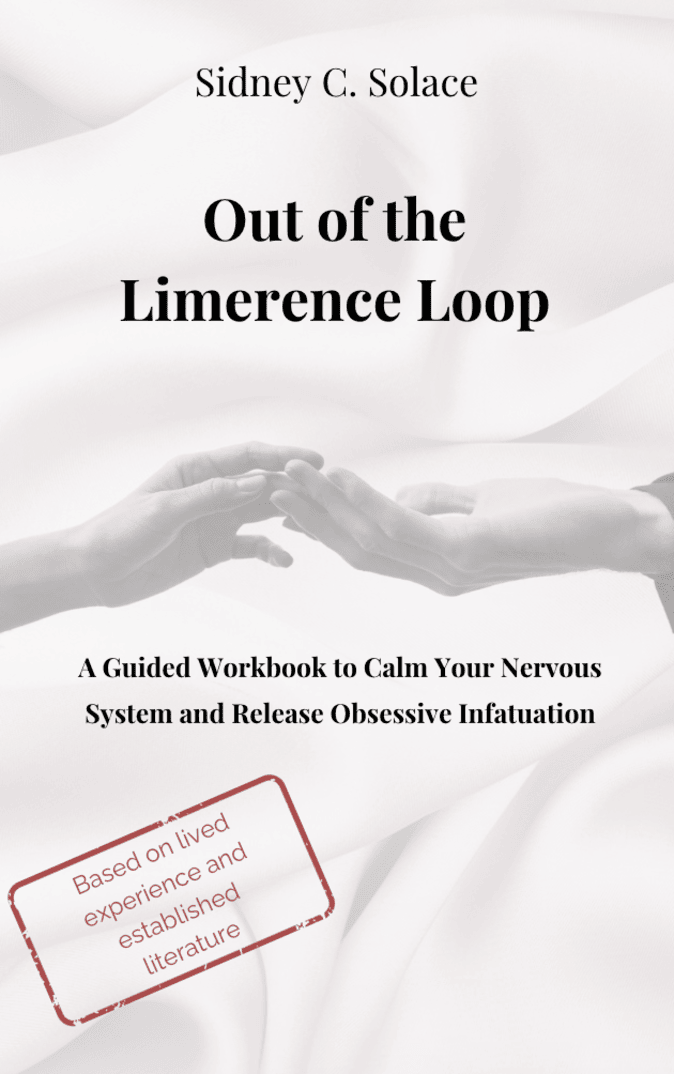
In Out of the Limerence Loop, I go beyond explaining what limerence is. I also help you explore why this dynamic feels so intense with this particular person at this point in your life. In the workbook section, you can:
- map out the types of people you are repeatedly drawn to and the relationship patterns you recognise;
- explore which situations and characteristics trigger the strongest reactions in you;
- gently investigate whether you are hoping your LO will meet needs that existed before this connection.
The aim is not to dismiss your feelings, but to offer you something more practical to work with than simply hoping things will get better on their own.
Back to the basics
If you would like to revisit the basics, you can read more about what limerence is and how to recognise it in your daily life.
You do not have to understand every part of this attraction all at once. You are not alone in finding it confusing, and you can begin exploring your experience without judging yourself. Small steps towards understanding your feelings and caring for your own needs are enough to begin.
Frequently asked questions about why limerence focuses on a particular person
Frequently asked questions about why limerence focuses on a particular person
Did I choose to become so fixated on this person?
Did I choose to become so fixated on this person?
Not in the sense of making a deliberate decision. The attraction and recurring thoughts may feel involuntary. You can explore whether familiar patterns or unmet needs play a role without blaming yourself for having these feelings.
Does limerence mean this person is my soulmate?
Does limerence mean this person is my soulmate?
The intensity of your feelings does not, by itself, show that you are meant to be together. It can help to look beyond the attraction and consider what the actual connection offers: mutual interest, availability, respect, and consistency.
Does this have to do with trauma or my childhood?
Why do I always fall for the same type of person who isn't really available?
How do I know if this is regular infatuation or limerence?
Does limerence go away on its own if I get enough attention from my LO?
About the author

I’m Sidney, a writer and the person behind Sid’s Saferoom. I draw on years of personal experience with limerence, and I’m a certified trauma-informed coach (IPHM-accredited through The Complete Approach).
Knowing firsthand how lonely and exhausting obsessive infatuation can be, I dedicate my work to helping others heal. I write about it and developed the theory and workbook Out of the Limerence Loop. My mission is to provide you with the psychological insights and practical tools needed to interrupt the obsessive loop and restore peace to your nervous system.
- Want to know more? Read my full story on the About Me page.
Weekly support? Subscribe to my English-language essays at substack.com.