
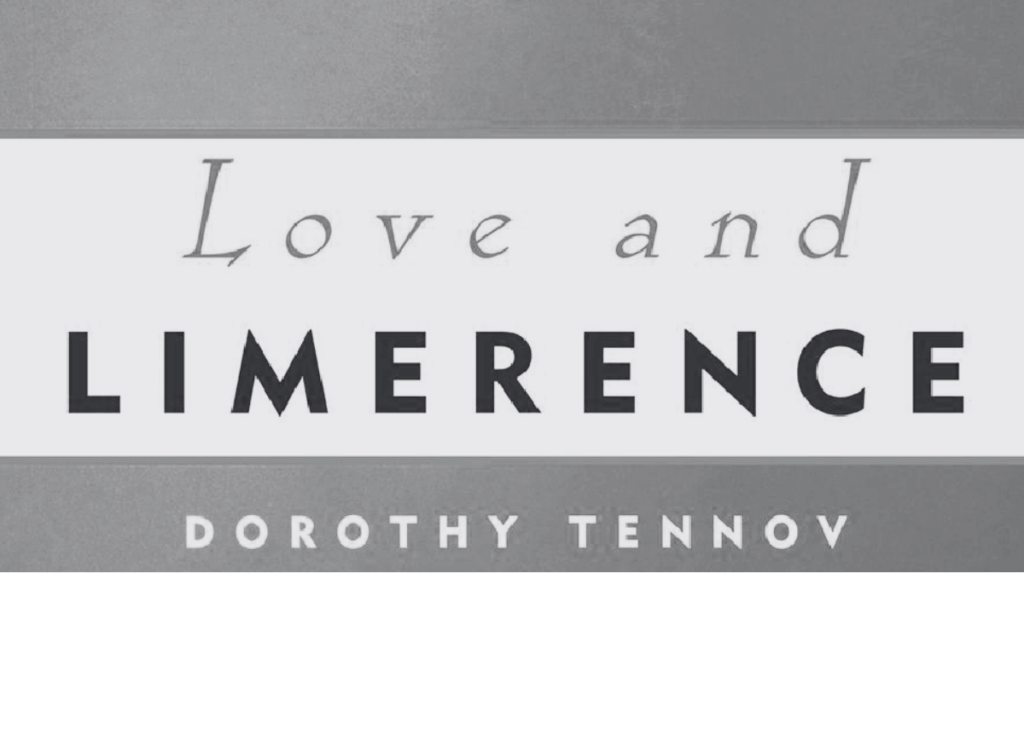
In this article you can read why Love and Limerence that psychologist Dorothy Tennov's book remains important for people who get stuck in intense infatuation. That is important when one person takes up so much space in your head that a glance, a text message, or silence affects your entire day. You will receive an explanation of what Tennov meant by limerence, why uncertainty can intensify these feelings, and how you can step by step return more to yourself.
When Dorothy Tennov in 1979 Love and Limerence: The Experience of Being in Love published, she gave a name to an experience that many people knew well, but found difficult to explain. She used the word limerence for an intense, often involuntary form of infatuation in which one person becomes central and the desire to be chosen in return can become very great.
That does not mean that limerence is an official psychiatric diagnosis. The word can be enormously helpful, though: not as a label that says something is wrong with you, but as language for something you may have carried alone, shamefully, or in silence for a long time.
My first recognition in Tennov's book
I first heard the word years ago limerence on YouTube. Very soon after that I Love and Limerence going to read Dorothy Tennov. Just holding that book in my hands and reading the descriptions felt important to me.
Not because I suddenly knew how to solve everything. But because I discovered that there were more people who knew that same heavy blanket of intrusive thoughts. That one person can lodge themselves so stubbornly in your head, that you color your days around possible signals, fantasies, hope, or grief.
I had kept this hidden for a long time. There was shame attached to it. Why did one person take up so much space in my head? Why could something small — a possible sign, a memory, an encounter, or silence itself — have so much influence on how I felt? The realization that others went through this too, and that someone had done serious research on it, brought me relief. I was not the only one. And I didn't have to view myself solely as weird, weak, or “too much.”.
That is for me one of the greatest values of Tennov's book: it makes room for recognition without making your experience smaller.
Understanding limerence can bring a lot of relief, but it can also confront you with how much space thoughts, fantasies, and hope have already taken up in your life. In Recognizing limerence: why the first stage of recovery is so difficult I am writing about what happens when that realization truly sinks in for the first time.
Why this book has been so important
For Tennov, “being in love” was not one simple, universal feeling. She saw that people can react very differently to romantic attraction. Some people strongly recognize the overwhelming preoccupation, the physical tension, the euphoria of a possible sign, and the pain of uncertainty. Others hardly know that experience or not at all.
Tennov did not build her book solely on her own ideas. For years, she gathered personal stories through interviews, questionnaires, letters, and diaries from people who had experienced intense infatuation and obsessive preoccupation. Precisely because she laid so many different experiences side by side, she was able to see recurring patterns: intrusive thoughts, the hope of being chosen, intense emotional highs and lows, idealization, and uncertainty about reciprocity.
That approach made Love and Limerence Remarkable. Tennov did not try to define how love “ought” to feel, but listened to what people themselves shared about an experience that was often difficult to explain and sometimes deeply embarrassing. As a result, many readers felt for the first time: this isn't just in my head; others know this intensity too.
With the word limerence she tried to make a distinction between that intense state of being in love and other forms of love, desire, sex, or long-term attachment. That distinction is still valuable. Not to say that one is “truer” than the other, but to better understand why some feelings can feel so much more intense, compelling, and confusing.
The book did not immediately become the foundation of a major scientific field. In psychology, attention shifted toward attachment theory, among other things, and the term limerence faded into the background for a time. Yet Tennov’s work endured as a point of recognition for people who did not find themselves reflected in the usual language about a crush, being “in love,” or relationship problems.
As the topic is discussed more online, contemporary writers and researchers are also returning to her work. Neuroscientist Tom Bellamy describes, for example, that Tennov's book helped him understand his own experience of limerence. He calls reading it an aha moment: suddenly, a confusing, intense experience was given a framework and words.
For me, the meaning of Love and Limerence not with the thought that Tennov had all the answers. The science surrounding limerence is still limited and limerence is not an official diagnosis. But her book was important because she took a human experience seriously that is often dismissed, romanticized, or outright condemned. She gave language to the thought: this is not happening to me because I am crazy; something is happening in my attention, hope, and desire that I need to learn to understand better.
If you first want to explore what limerence actually is, also read What is Limerence. If you are doubting whether what you are feeling still fits within intense infatuation or resembles limerence more closely, then you can Just in love or limerence? help you look at that without judgment.
What Tennov meant by limerence
Tennov used the term limerent object, usually abbreviated as LO, for the person your feelings become directed toward. That term can sound clinical, but I sometimes find it helpful. It distinguishes between the human being someone truly is and the enormous significance your system can start giving that person.
With limerence, it is often not just about attraction. Your LO can unconsciously become a symbol for things you deeply long for:
- Being seen and chosen
- Validation that you are attractive, special, or good enough
- Security or peace in love
- A way out of feeling lonely, flat, or overwhelmed
- Hope for another life or a new beginning
Then your significant other becomes more than one person. That other person stands in your inner world for a possible solution, future, or validation. That does not mean your feelings are inauthentic. It mainly means that they often carry a heavier load than just: I like this person.
Tennov's language also helps to understand why Intrusive thoughts in limerence can be so persistent. You don't just think back about the other person because you want to. Your brain has become alert to everything related to hope, connection, potential reciprocity, and loss.
The glimmer: when someone suddenly feels different
Some experts, such as Tom Bellamy, speak about the glimmerthat first moment when someone suddenly feels different from other people. Anna Runkle, known online as the Crappy Childhood Fairy, also talks in her YouTube videos about that glimmer moment and the experience of someone unexpectedly taking on a great deal of emotional significance. Bellamy is a neuroscientist and writer; Runkle approaches the subject from experiential trauma education. They are different perspectives, but both can put into words an experience that is difficult for many people to explain.
The glimmer can arise in something very small. A glance. A conversation. Humor. Someone's vulnerability. A moment when you feel seen. A certain energy, voice, or way of looking. Not because that person is objectively perfect, but because something is touched within your system.
I haven't felt a clear glimmer with every limerence object. But I do know moments when I saw someone's face and a shock almost went through me. I didn't immediately attach any grand meaning to it. It was more like: Ooh, haha. A brief physical reaction, as if something awoke inside me and immediately made that person different from others.
Such a moment does not mean that someone is destined for you. Nor is it proof that a relationship or special connection truly exists. It can be the beginning of an inner association: this person touches something I long for — to be seen, excitement, recognition, validation, safety, or hope. Bellamy describes that limerence can become particularly stronger when such a spark coincides with the hope of reciprocity and uncertainty about the other person's reaction.
10 Valuable Insights in a Free Guide
Some people who land on this page have googled limerence tens of times. You know the definition. You know the stages. But there's a big difference between knowing what it is and actually getting out of it. I wrote a free guide with 10 insights that go a bit deeper. A guide that can help you on your way and explain that you are not alone.
Why uncertainty can fuel limerence
One of the most recognizable ideas in Tennov's work is the role of uncertainty. If you know exactly where you stand, it can be painful, but also clear. When you do not know what your LO is feeling, when signals are mixed, or when there is warmth at times and distance at others, your brain often keeps searching.
Then small things can take on enormous meaning:
- A message can feel like euphoria or relief
- No response can ruin your whole mood
- An emoji or change in tone can call for hours of analysis
- A chance encounter can fuel the imagination for days again
- You might think: If only I knew what this person really feels, then I would find peace.
But precisely that search for certainty can keep the limerence loop going longer. Your attention keeps scanning: Is there hope? Is there rejection? Do I need to do something? Did I miss something?
If you notice that you endlessly want to understand what someone means, you can Why you try to understand everything about that other person provide recognition. Often you are not just trying to analyze the other person; you are trying to make a feeling of insecurity within yourself manageable.
First small steps when you are in the groove
The goal isn't to forbid yourself from ever thinking about your LO again. You also don't have to push your feelings away or punish yourself for them. However, you can practice stopping the automatic tendency to feeling → analysis → hope → impulse to recognize it a little earlier.
- Name what is really happening. Say softly to yourself: I am not looking for an answer about my LO right now, I am looking for reassurance. That can make a small difference between feeling and acting immediately.
- Separate event and meaning. A like, a message, or a look is an event. “This proves there is something between us” is a meaning your brain gives to it. Write those two down separately if you notice you are getting overwhelmed.
- Explore what the glimmer touched for you. No: Why is this person so special? However: what did I possibly feel in them that I needed myself — recognition, peace, excitement, being seen, hope? You don't need to know the answer right away.
- Do not make a contact decision in the middle of a wave. Make a pact with yourself to only decide after a pause whether you want to send a message, look something up, or check social media. An impulse can feel very real without you having to act on it.
- Consciously return to something outside the limerence loop. Step outside for a moment, take a shower, call a trusted friend, cook, write three sentences in a notebook, or do something with your hands. Not just as a punishment or distraction, but as an exercise: my nervous system can find support in other places, too.
In my workbook “Out of the Limerence Loop” I will go into this in much more detail here. You not only explore what your LO has come to represent for you, but you also practice with boundaries, pulling back your attention, dealing with fantasy, and building more inner safety. If you want to work on this step by step, my workbook will help you go through these processes calmly and in a structured way.
Understanding limerence without rejecting yourself
What I ultimately find most valuable about Tennov's book is that it allows space for understanding without romanticizing. Limerence can feel euphoric, but also painful, exhausting, and lonely. You don't have to like it to acknowledge that it exists. And you don't have to beat yourself up to take an honest look at what it does to your life, attention, choices, or relationships.
You are not alone just because you cannot get someone out of your head. You are also not doomed to stay stuck in this pattern forever. Understanding what is happening is not the endpoint, but it can be the start of something important: learning to choose yourself again, even on days when your system still gravitates toward your ex.
Small steps are real steps. And if you find that you are getting stuck, you are allowed to seek support for that—through a therapist, a safe other, or a structured workbook. You do not have to carry this alone.
Frequently asked questions about Love and Limerence
Who was Dorothy Tennov?
Dorothy Tennov was an American psychologist who in 1979 coined the word limerence introduced in her book Love and Limerence: The Experience of Being in Love. She described an intense, often involuntary form of romantic preoccupation in which the desire for reciprocity can be central.
Why is Love and Limerence that important?
The book gave language to an experience that many people knew but found difficult to describe: obsessive thoughts about a single person, strong emotional reactions to potential reciprocity, and the influence of uncertainty. It helped explore the distinction between limerence, long-term love, sex, and general attraction.
Is the glimmer proof that someone is my soulmate?
No. A glimmer can feel like a strong, immediate click or a physical reaction, but it doesn't prove that someone is destined or good for you. Above all, it means that person has triggered something in your system.
Is limerence a mental disorder?
No, limerence is not an official independent psychiatric diagnosis. However, it can cause a lot of stress, intrusive thoughts, and problems in your daily life. If that is happening to you, professional help can be supportive.
Can I recover if I still think about my LO?
Yes. Recovery does not necessarily mean that you never think about your limerence again. It primarily means that the person increasingly commands less of your attention, mood, and choices. You can still have thoughts or waves [of feeling] and still recover step by step.
About the author

I am Sidney, writer, researcher, and the driving force behind Sid's Saferoom. In addition to my years of personal experience with breaking free from limerence, I am certified Trauma-Informed Coach (IPHM-accredited via Kirsty Watson, The Complete Approach).
Knowing firsthand how lonely and exhausting obsessive infatuation can be, I dedicate my work to helping others heal. I write about it and developed the theory and workbook Out of the Limerence Loop. My mission is to provide you with the psychological insights and practical tools needed to interrupt the obsessive loop and restore peace to your nervous system.
- Want to know more? Read my full story on the About me-page.
- Weekly support? Subscribe to my English-language essays at substack.com.