

In this article, you'll read why in limerence, it's so easy to get caught up in endlessly analyzing, and “dissecting” that one person. It almost feels like they are a puzzle you *must* solve, while you're barely getting what you need. You'll find recognition here, a psychological explanation, and first small steps to bring your attention back to the question: what do I actually want, and what if I don't get it?
I've done this myself for years. I'm naturally very analytical, and in my own limerence episodes, that meant I would “dissect” people almost endlessly: why do they do this, what's psychologically behind it, how can I make it work with enough understanding? When I truly understood what limerence is and how it worked in my head, I became much more aware of myself. I consciously started practicing to stop psycho-analyzing someone, however tempting that puzzle feels. That's also why I'm writing this workbook and these blogs: because I know how easily you can lose yourself trying to understand the other person, and how much peace it can bring when you can once again think: what do *I* want in this life?
When the other person becomes a puzzle that you must solve
In limerence, that one person often feels like a sort of riddle. Your thoughts don't just revolve around what he or she does, but also why: what's going on in their head, what wounds do they have, what about attachment, trauma, patterns?
Maybe you notice things like:
- You're reading articles about “just being in love or limerence?” and trying to fit your situation into them, for example via Just in love or limerence?.
- You're looking for explanations in their youth or previous relationships so that their distance, coldness, or fickleness “makes sense.”.
- You are mainly focused on: “If I just understand him or her well enough, then I can maneuver around this, and it will eventually be okay.”
It almost feels loving to be so engrossed in another person's inner world. But at the same time, something very painful is happening: you keep making excuses for behavior that actually hurts you. “He's just having a hard time,” “she's afraid to commit,” “he's been through so much, it's logical that he doesn't give much back.”
Those are all understandable thoughts, and they are often partly true. However: they place the emphasis on the other person, not on you. Your attention goes to explaining his or her behavior, instead of to the question of whether *you* are getting what you need in this relationship.
If you notice that puzzle is becoming almost an addiction, it can be helpful to also read about how limerence can resemble addiction, for example in Limerence is similar to addiction.
Old patterns: you used to scan others for safety too
This tendency to understand everything about the other person rarely comes out of nowhere. Often, as a child, you learned that your safety depended on how well you could read the moods, logic, and temperaments of important adults.
Perhaps you recognize some of this:
- You were very perceptive of your parents: you could already sense if it was “safe” from their attitude, voice, or gaze.
- You knew exactly when to adapt, when to be quiet, when to be funny, or when to be extra caring, so as not to provoke anger, shame, or rejection.
- You shouldered responsibilities that aren't appropriate for a child: keeping the mood light, not letting anyone down, and taking care of others from an early age.
The way of looking, constantly scanning what the other person is thinking to protect yourself, was a form of survival back then. Your brain learned: if I understand you well enough, I might be able to prevent danger.
In adult relationships, especially in limerence, that exact pattern resurfaces. The other person once again becomes the “figure” that everything revolves around: if only I understand you, then I can feel safe, then I can stay, then I don't have to make any painful decisions.
If you want to investigate why it's precisely this person you're stuck on, connect that with the questions in Why him or her? Als je merkt dat je blijft hangen in analyseren, kan het helpen om met de twee oefeningen uit Two exercises that gently interrupt limerence te oefenen met aandacht verschuiven.”
10 Valuable Insights in a Free Guide
Some people who land on this page have googled limerence tens of times. You know the definition. You know the stages. But there's a big difference between knowing what it is and actually getting out of it. I wrote a free guide with 10 insights that go a bit deeper. A guide that can help you on your way and explain that you are not alone.
Limerence intensifies rumination.
Limerence makes this old strategy even more powerful. You are already obsessively focused on one person: you think, fantasize, rehash conversations, and base your day on what he or she is doing or not doing.
Instead of feeling “I'm missing something,” you'll think:
- “He’s so damaged; it makes sense that he can’t really give me what I need.”
- “As long as I give her enough space and understand everything, she’ll come closer on her own.”
- “My job is to understand and comfort him or her, not to ask for anything in return.”
The other person feels like a puzzle you *have* to solve. And secretly, there's a lot in that: if I can just figure out the puzzle, maybe this person will reciprocate.
But that's not your job. Your job is not to change, fix, or psychologically “fix” someone so they can finally give you what you need. Your job is to think: what do I want in this life? And if you don't get it, to let go with a heavy heart.
In The Limerence Cycle I describe how you can get caught in a kind of loop of hoping, analyzing, magnifying small signals, and falling back. This blog connects directly to that: psychoanalyzing others often perpetuates that cycle.
Also Limerence and attachment styles It can be helpful if you notice you're constantly looking for explanations in commitment phobia, separation anxiety, or old attachment patterns.
From understanding others to: what do I want?
At some point, you need to shift your perspective. Not because the other person is “bad,” but because otherwise you’ll continue to live in a world where you focus mainly on what’s going on inside him or her, and very little on yourself.
A few honest questions can help:
- What do I need to feel safe and seen in a relationship?
- Will I get that here, not even perfectly, but noticeably and with intention?
- Is there room for my boundary, or is it stretched every time because I've found a new explanation for their behavior?
The answer doesn't have to be black and white immediately. But if you notice time and time again: I'm mostly explaining why I'm getting so little, then it's important to acknowledge that this hurts. That you are worthy of not only understanding but also receiving.
Sometimes that means experimenting with small boundaries. Sometimes it means acknowledging that this relationship cannot bear your deep desire for reciprocity, and that distance or separation ultimately comes with it. That may be with a heavy heart.
If you want to read what it looks like when limerence slowly fades from your life, you can Life After Limerence to give you an idea of the other side.
Small steps to stop overthinking
You don't have to stop thinking and analyzing overnight. But you can take small, achievable steps:
- 1. Notice when you start “puzzling” again”
Simply state: “I am now analyzing him or her in my head.” Without judgment, as if you are calmly turning on a lamp in a room. - 2. One question back to yourself
Whenever you notice yourself falling into analysis, ask yourself one question: “What do *I* need right now?” Maybe that's an answer, maybe rest, maybe support from someone else. - 3. Be honest about what you do and don't get
Create a short list: what does this person give, what do they structurally not give. This can be confronting, but it helps you get out of your head and into reality. - 4. Practice a small border
Practice with one small boundary: not always taking the initiative yourself, clearly stating what you need once in a while, building in a moment of distance when you notice you're losing yourself. It doesn't have to be big; it's about practice.
You will find that your brain keeps wanting to revert to the old strategy. That's normal. It's not about stopping perfectly, but about gently returning a few times a day to: “how is this for me?”
Blogs as Limerence and Boundaries: When It Hurts Your Life en No contact with limerence Can help you better understand those small boundaries and sometimes bigger choices.
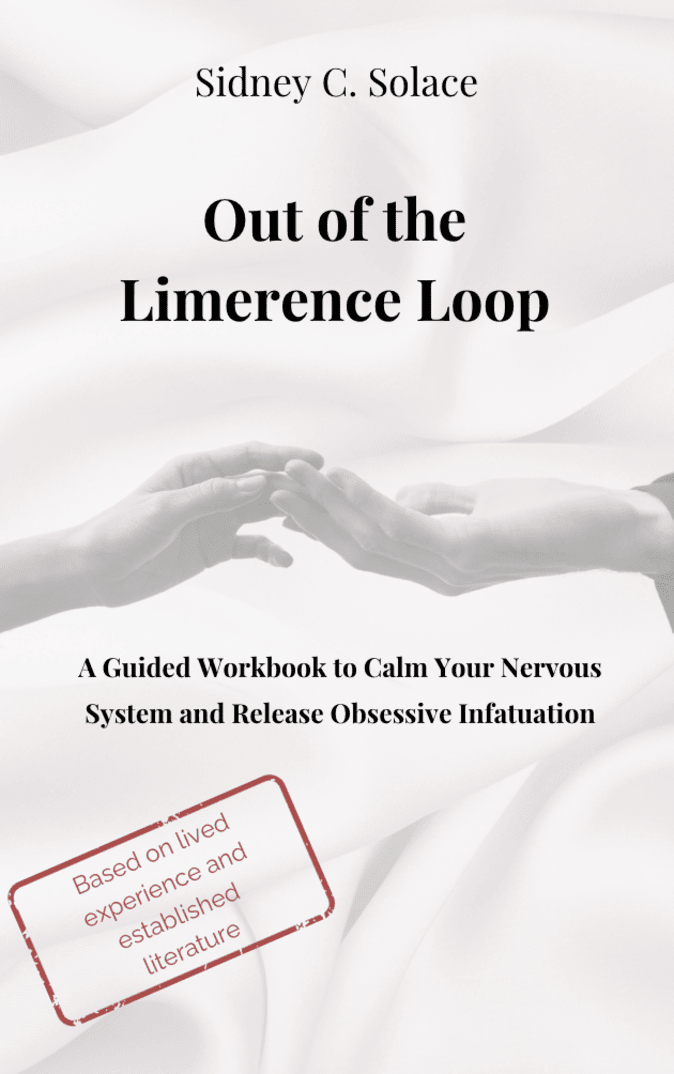
In my workbook, you don't have to endlessly dig into the past.
In my workbook, I *do* delve into old patterns: how you might have learned to be very critical of others, and how that carries through into limerent relationships. There are a few exercises included that gently help you see that connection to your childhood or previous relationships.
But the book isn't meant to endlessly dredge up old wounds. The focus is rather on practical, concrete exercises that keep you in the here and now: what is happening now in this relationship, what am I thinking and feeling, what am I doing, and what small choice can I make differently today?
If you want to approach this step by step, my workbook will help you to calmly recognize these patterns and, above all, to practice different choices in the here and now, without having to dredge up everything from your past.
Finally
If you recognize yourself in endlessly analyzing your limerent object or partner, you are not strange and not weak. Your brain is doing what was once necessary to protect you. Limerence makes it easy to repeat that old strategy, but you are allowed to learn to bring your attention back to what you need and deserve.
It's okay if it's difficult and involves trial and error. Small, gentle steps are enough. You don't have to let go all at once or do everything perfectly.
Frequently Asked Questions about Limerence and Constant Analysis
Is it normal to keep psychologically analyzing your limerence person?
Yes. Many people with limerence do this; it's a way to make uncertainty and pain manageable, especially if you were used to it before.
Does this mean I'm “codependent”?
Not automatically. It is possible that you are repeating old patterns of over-adapting and caring for others. Labels are less important than looking at what you need now.
Do I need to comb through my entire childhood to get over this?
No. Understanding your past can certainly help, but a lot of movement is in small, current choices: boundaries, honestly looking at what you're getting, and taking yourself seriously in what you desire.
How do I know when distance is healthier than continuing to hope?
Pay attention to the balance: if your pain is structurally greater than what you get back, and there is little change, distance is often a loving choice for yourself.
Can I do this myself, or do I always need therapy?
You can start with awareness and exercises yourself, for example with my workbook. Sometimes it's helpful to work with a therapist alongside this, especially if it touches on a lot of old pain.
About the author

Sidney C. Solace is a writer with a background in investigative journalism and years of personal experience with limerence and, more importantly, overcoming it.
She explores the psychological patterns behind obsessive infatuation and attachment, and writes for people who seem to function on the outside but feel completely consumed by one person on the inside. In Out of the Limerence Loop, she combines theory and practice to give readers more language, calm, and direction on their path to recovery.