

In this article you’ll learn why mixed signals during limerence can evoke so much confusion and hope. If someone is initially warm and involved, but withdraws as soon as you get closer, you can endlessly search for what that means. You’ll learn how to recognize this pattern, why it can keep you stuck, and what small steps can help you turn your attention back to yourself.
Perhaps you recognize this: someone seeks out a lot of contact with you, is attentive, shares personal things, or makes you feel that there is something special between you. You relax a little and dare to show warmth yourself. But just then something changes. The other person responds coldly, pulls away, or says something that feels unexpectedly insensitive.
You’re left with questions. Was the warmth genuine? Did you take one step too many yourself? And if that person is friendly again later, what should you make of it?
For someone experiencing limerence, such moments can take up a lot of space. Not because you are doing anything wrong, but because you are seeking clarity in a situation that does not give you clear answers. If you do not yet know exactly what limerence means, first read What limerence is.
10 Valuable Insights in a Free Guide
You may have searched for information about limerence many times already. You know the definition, and you recognise the patterns. But understanding limerence and finding your way out of the loop can feel like two very different things. I wrote a free guide with 10 insights that go a little deeper, to help you make sense of your experience, take a first step, and feel less alone.
Why mixed signals are so confusing
When someone is consistently distant, that can be hurtful. But alternating warm and distant reactions often evoke a different kind of confusion. After all, you have also experienced moments when the other person seemed involved. Perhaps that person was even the one who made the contact intense.
Because of this, it is difficult to distance yourself from what you felt. At a quiet or painful moment, you think back to a long conversation, a tender gesture, or a message that sounded promising. You wonder which side of this person is the ‘real’ one: the warm side or the distant one.
Perhaps the answer is less straightforward than you hope. Someone can be genuinely warm at one moment and yet not be willing or able to give you the reciprocity you desire. A nice conversation is not an automatic promise. And a distant response does not automatically tell you why someone withdraws.
Just because you don’t know for sure, you can keep searching. You read back messages, remember conversations, and try to discover a pattern. Sometimes that yields insight. But if you keep asking the same questions over and over without getting any new information, it can also be exhausting.
When someone alternates between reaching out and pulling away, the question ‘How do they feel about me?’ can take up a lot of space in your mind. Another question may fade into the background: is this person actually right for me, and does this contact meet my needs? In Limerence: Why You Keep Longing for Someone Who Isn’t Right for You I explore why you can keep longing for someone while recognising that important needs or values don’t align.
When you get closer and the other person pulls away
A situation that can cause extra pain is when the other person first shows a lot of warmth themselves. Perhaps they approach you, flirt with you, or share something vulnerable. You get the impression that your feelings are welcome. But as soon as you respond and seek proximity, the other person seems to back down.
Then you might think that you handled it wrong. Were you too enthusiastic? Should you have been less obvious? Should you distance yourself now so that the other person will come back?
I recognize that confusion from my own limerence experience. What confused me most was the alternation. Someone could be completely focused on me and very warm. But as soon as I responded to that warmth and took a step closer myself, that person took a step back or suddenly said something that felt insensitive. Then I kept spinning in the same questions: Have I done something wrong? What did that person mean? Why does this keep happening? Now I would ask myself: Does this contact actually make me happy? But at that moment I was so deep in it that I hardly even considered that question.
That is one of the reasons why I am writing about limerence and have created my workbook. During a period like this, you can spend so much energy trying to understand the other person that you barely notice what the contact is doing to your own life.
By that I am not saying that someone who gives mixed signals is doing so intentionally. You cannot determine from the outside what their intention is. But you do not need to know their intention to take seriously the fact that this contact makes you feel uncertain or sad.
When searching for meaning becomes a loop
There is a difference between calmly reflecting on a situation and constantly getting stuck in the same rut. Perhaps you notice that you keep repeating the same events: that warm message, that distant remark, the time when the other person finally tried to reconnect. Each time you hope that you will finally understand what is going on.
When the other person shows warmth again, it can feel like an answer. See, I didn’t imagine it. And when they pull away again, the searching begins all over again. This reflects what I describe in the limerence loop: a pattern in which hope and uncertainty keep following each other.
It helps to ask yourself a different question at such a moment. Not only that: “What does this one message mean?” But also: “What does our relationship look like over a longer period of time?”
One warm moment can be meaningful. At the same time, you may want to see if there is room for clarity, reciprocity, and attention to your feelings. If you mostly wait, think, and adjust yourself, that is also information — not necessarily about what the other person feels, but about how you experience the contact.
Sometimes the thoughts become so intrusive that they follow you into work, rest, or conversations with other people. In Intrusive Thoughts During Limerence, you can read more about this constant analysis.
You don't have to figure out the other person's behavior.
When someone comes close and then distances themselves, you may be tempted to find the right approach. Maybe you think you need to be more patient, ask less, or give just enough space. If you can understand what the other person is going through, the connection may finally become clear.
But a relationship or connection cannot become more peaceful just because you learn to better deal with ambiguity. Your need for clarity and reciprocity also matters.
That doesn’t mean you have to make a big decision right away. You can be more honest with yourself. What happens when you show your feelings? Can you indicate that something hurts you? Is there room to ask questions, or are you mainly concerned with not scaring the other person off?
A boundary can begin with acknowledging your own experience: “I notice that these mixed signals make me feel very unsettled.” You don’t have to blame the other person to take that feeling seriously. In Limerence and Boundaries, you can read more about protecting your own space when strong feelings influence your choices.
Small steps to look at yourself again
If you’re in the middle of confusion, you don’t need to immediately know what you want to do with the contact. Start with a few small steps that will help you get out of the constant search for explanations.
- Look at the pattern, not just the warmest moment. Think about the contact you have had over the past few weeks or months. How often have you felt calm and clear about where you stand? And how often have you been left with questions?
- Write down facts and assumptions separately. “That person said they would like to see me” is different from “They definitely want a relationship, but they aren’t brave enough to commit to it.” Both thoughts may feel important, but only the first describes what you actually know.
- Note what happens after you seek proximity. Do you feel free to be yourself, or do you become cautious and afraid of doing something wrong? That reaction deserves attention.
- Ask yourself the question you may have been avoiding. Not only, “Why is the other person doing this?” but also, “Does this contact make me happy as it is now?” You don’t have to turn the answer into a decision straight away.
- Take a short break from analyzing. For example, decide that you will not reread the conversation today. If your thoughts return to the other person, focus instead on something concrete in your own day.
- Do not decide based solely on hope. Hope is understandable, especially if you have also experienced good moments. In addition, try to take into account what is really happening and what you need.
For some people, taking more distance helps when every new interaction reignites the confusion. That does not always have to mean a permanent break. In No Contact During Limerence, you can read how creating distance can give you space to feel more clearly what you want.
These steps are meant as a starting point, not as an instruction to make a quick decision about your feelings or the contact. If you want to explore more systematically why you keep getting caught up in this pattern and practise bringing your attention back to your own life, my workbook can help you work through it step by step.
Out of the Limerence Loop.
Would you like a deeper understanding of what limerence is and why it can be so hard to break free from? In Out of the Limerence Loop, you’ll find clear explanations and a wide range of practical exercises, so there is always something that fits you and your situation. You will learn to recognise your patterns and gain practical tools to gradually create more space in your mind and your life.
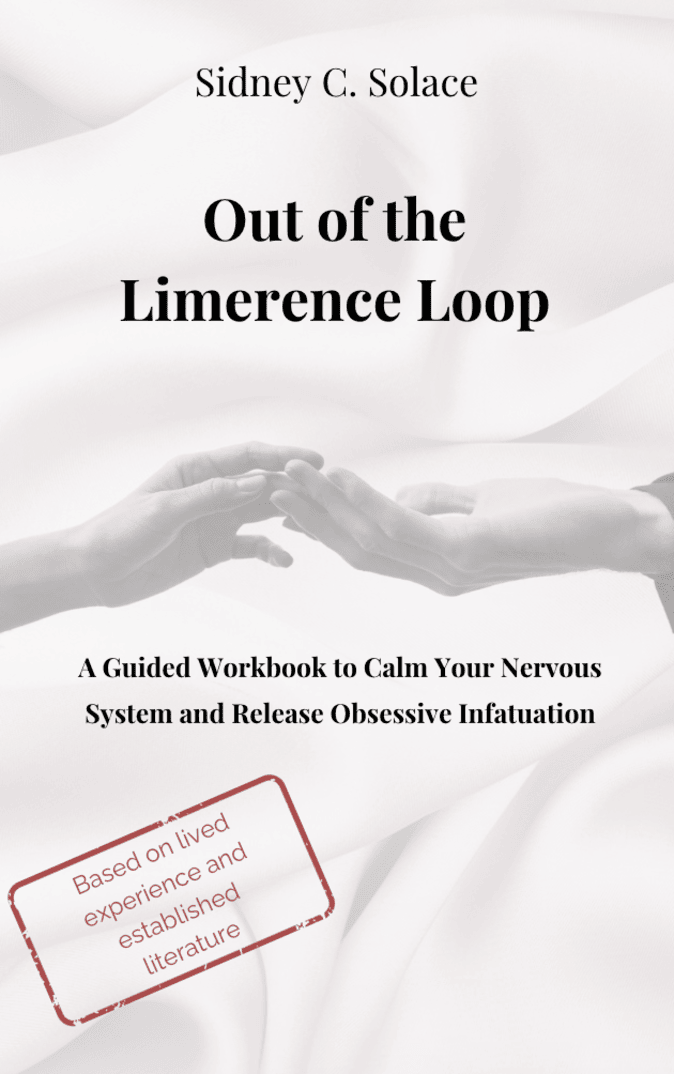
Perhaps you cannot answer today where this contact is going. That is not necessary either. You can start with a smaller, more honest question: How am I doing while I’m in this situation? You are not alone when that question is difficult; limerence is understandable, and even small steps can help you feel more space for yourself again.
Frequently Asked Questions
Why do I keep hoping when someone gives mixed signals?
Because warm moments have meaning for you and you don’t yet know how to place the distant moments. Therefore, don’t just look at individual signals, but also at the pattern as a whole.
Do mixed signals mean that the other person also has feelings?
Not necessarily. Warm behavior can show genuine involvement, but it doesn't automatically tell you what someone wants or can offer. Clear communication and behavior over a longer period of time say more.
Am I doing something wrong if someone distances themselves as soon as I approach them?
You can’t draw conclusions from just one reaction. Don’t automatically assume that you bear all the responsibility. You should also consider whether there is room in this relationship for your feelings.
Do I have to break off contact to get out of this pattern?
Not always. Sometimes it helps first to analyze less, set a boundary, or ask for clarity. If contact keeps upsetting you, taking a step away can be a consideration.
How do I stop analyzing the same conversations over and over again?
Start small: write down what actually happened, note the meaning you attach to it, and then consciously shift your attention to something in your own day. You don’t have to answer every question about the other person before you can take care of yourself.
Cover photo by Paulo Chiabrando
About the author

I’m Sidney, a writer and the person behind Sid’s Saferoom. I draw on years of personal experience with limerence, and I’m a certified trauma-informed coach (IPHM-accredited through The Complete Approach).
Knowing firsthand how lonely and exhausting obsessive infatuation can be, I dedicate my work to helping others heal. I write about it and developed the theory and workbook Out of the Limerence Loop. My mission is to provide you with the psychological insights and practical tools needed to interrupt the obsessive loop and restore peace to your nervous system.
- Want to know more? Read my full story on the About Me page.
- Weekly support? Subscribe to my English-language essays at substack.com.